
Loading...
Serving Wichita Falls, TX and surrounding areas. (940) 298-1855
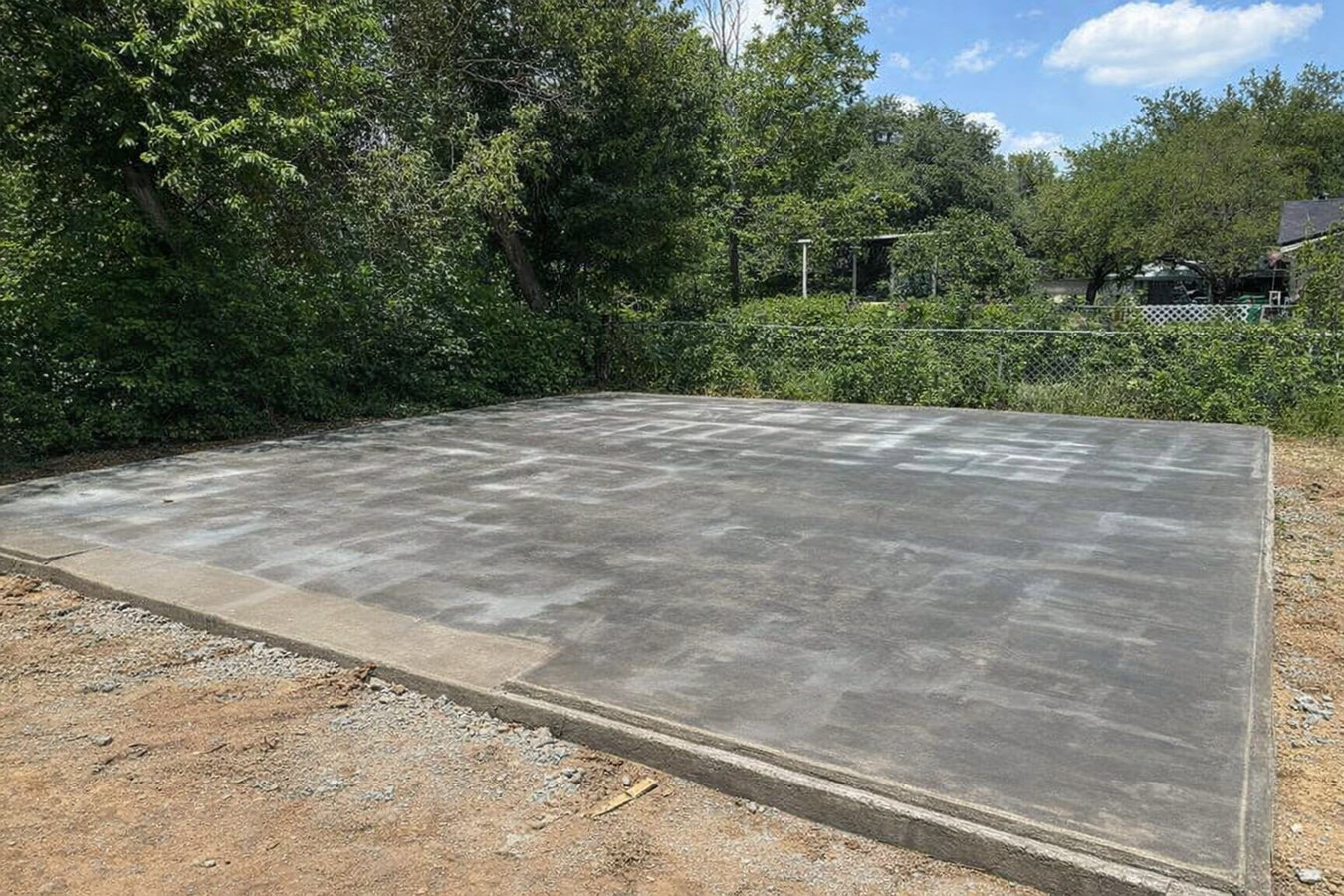
Wichita Falls Concrete Contractor serves Abilene, TX with slab foundations, driveway replacement, concrete patios, and retaining walls - every job designed for Taylor County's expansive clay soil and the intense heat cycles that make West Texas concrete work different from anywhere else. We reply to every estimate request within one business day.
Nearly every home in Abilene sits on a concrete slab, and Taylor County's expansive clay soil means those slabs need to be designed with deeper edge beams and more internal steel than a contractor from outside this region might assume. Our slab foundation building work accounts for the way West Texas clay moves with every rain and drought cycle - not just what minimum code requires.
Abilene's stock of brick ranch homes built in the 1950s through 1970s means a large share of driveways in the city are now 40 to 60 years old - thinner than current standards and poured before the soil reinforcement practices that West Texas conditions require. Replacing them correctly means addressing the base, not just laying new concrete over the same unstable ground.
Abilene homeowners deal with open lots and intense summer sun, and a concrete patio that was not graded to drain properly will hold water against the house during the heavy spring thunderstorms the area gets from March through May. A patio poured on a well-prepared base with the right slope stays level through the seasonal soil movement and does not trap water where it can cause problems.
Abilene's flat to gently rolling terrain and open lot sizes create situations where retaining walls are needed to separate grades, hold back soil at lot edges, or frame outdoor areas. Clay soil that swells with moisture puts real lateral pressure on retaining walls, which means the drainage behind the wall and the depth of the footing determine how long it stays in place.
Older Abilene neighborhoods near Abilene Christian University and the downtown area have sidewalks that have heaved and cracked from decades of root pressure and clay soil movement. Properties with long lot frontages on open West Texas streets need new walks built on a proper compacted base that will stay flat through the temperature swings and drought cycles the area sees every summer.
The expansive clay soil under Abilene homes causes slabs to settle unevenly over time - one section drops while another stays level, and the result is sticking doors, cracked drywall, and floors that feel off. Homes built in the 1950s and 1960s throughout the city are particularly common candidates, since those slabs have been through decades of seasonal soil movement without the reinforcement that current construction standards call for.
Taylor County's expansive clay soil is the single biggest factor that separates concrete work in Abilene from jobs in other parts of Texas. This clay swells when it absorbs water after a rain and shrinks when it dries out during the long, hot summers that West Texas sees regularly. That repeated cycle of expansion and contraction pushes up on driveways, pulls away from foundation edges, and eventually causes cracking and settling across nearly every concrete surface that was not built to handle it. A contractor who does not account for local soil behavior in the base preparation and reinforcement choices is leaving the finished work vulnerable from day one.
The dominant housing type in Abilene is the single-story brick ranch built between the 1950s and 1970s. These homes were well-suited to the climate when they were built, but many are now on slabs that are 50 to 70 years old, poured thinner and with less internal reinforcement than current standards call for. Driveways and patios from the same era are in similar shape. Homeowners in these neighborhoods are often replacing, not just repairing, their concrete - and starting over the right way means correcting the base and reinforcement that the original work skipped or could not anticipate.
Abilene's climate adds its own pressures beyond the soil. Summers regularly push above 95 degrees from June through August, and that heat accelerates how fast fresh concrete loses moisture during curing. Concrete that dries too quickly at the surface ends up weaker than it should be. Spring also brings severe thunderstorms and occasional hail from March through May, and heavy rain immediately after a pour can damage a fresh slab before it has had time to set properly. These are not hypothetical concerns for a contractor working in Abilene - they are part of the seasonal calendar here.
We pull permits through the City of Abilene Development Services department for every job in Taylor County that requires one, and we have worked on the brick ranch homes that make up the backbone of this city's residential neighborhoods - from the streets near Abilene Christian University on the north side to the older subdivisions closer to downtown and Frontier Texas! on the west end of the commercial strip. Every one of those properties presents the same underlying challenge: clay soil that does not stay still.
Abilene sits at the edge of the Permian Basin on flat to gently rolling terrain, and that open landscape means wind and sun hit every concrete surface hard for months at a time. US 83 runs through the city from north to south, and I-20 cuts through the southern part of the metro connecting Abilene to the broader West Texas corridor. We have worked in the older neighborhoods around Hardin-Simmons University and McMurry University, as well as on the newer developments pushing east along the Loop 322 area.
Homeowners in the Lawton, OK area face similar clay soil challenges, and we serve that market as well. For Abilene neighbors on the west side who are closer to the Mineral Wells, TX corridor, we work throughout that area too. Knowing how soil and climate conditions shift across this part of Texas informs how we approach base preparation on every job.
Reach out by phone or through the contact form and describe your project. We reply to every Abilene area inquiry within one business day and will schedule a free site visit - phone quotes alone are not reliable for concrete work because soil conditions and site access vary too much across Taylor County.
We visit the property, check the soil and site conditions, measure the work area, and review any plans. You receive a written estimate that breaks out site preparation, permits, reinforcement, and labor separately - so there are no surprise charges after work begins. We also handle the permit application with the City of Abilene at this stage.
The crew prepares the base - excavating unstable clay, compacting gravel, and setting forms and steel before any concrete is placed. In Abilene summers, pours are scheduled for early morning to avoid the peak heat that causes concrete to dry too fast at the surface. The pour itself typically takes a single day for residential-scale work.
After the pour, the concrete needs at least a week to cure before vehicle traffic and longer in hot, dry conditions. We coordinate the city inspection, walk you through the finished work, and explain joint sealing and maintenance specific to West Texas conditions. You get documentation showing the job was permitted and inspected.
We serve Abilene and Taylor County with free on-site estimates. No phone quotes - we come out, look at the site, and give you a written price that accounts for your specific soil and lot conditions.
(940) 298-1855Abilene is the largest city in West Texas north of the Permian Basin, with a population around 125,000 spread across Taylor County. The city sits on flat to gently rolling terrain at an elevation of about 1,700 feet, and its open landscape and semi-arid climate give it a character that is distinct from the more humid cities to the east. Three universities - Abilene Christian University, Hardin-Simmons University, and McMurry University - anchor the north and east sides of the city and give Abilene a consistent educational and institutional presence. According to the Wikipedia article on Abilene, Texas, the city has been a regional hub for West Texas commerce and culture since the Texas and Pacific Railway arrived in the 1880s.
The dominant residential style is the single-story brick ranch house, most of which were built between the late 1940s and the early 1980s when the city was growing steadily and Dyess Air Force Base was bringing in a large, stable workforce. Owner-occupied neighborhoods spread out in all directions from the city center, with modest lots and open yards that absorb the full force of the West Texas sun. The neighborhoods near ACU, around the Dyess perimeter, and along the older streets near downtown all carry the same underlying soil conditions - heavy clay that moves with every rain and dry spell.
The city has continued to grow with newer residential subdivisions pushing east and southeast along the Loop 322 area, where homes built in the 1990s and 2000s are now reaching the age where their original concrete flatwork starts to show the effects of local soil movement. Abilene is roughly 150 miles from Wichita Falls to the northeast and near the eastern edge of the Permian Basin region. Homeowners in the broader West Texas corridor, including those near Lawton, OK to the north or in the Mineral Wells area to the east, encounter similar soil and climate conditions that make local contractor knowledge valuable.
Durable concrete driveways designed to withstand heavy use and North Texas weather.
Learn moreCustom patio slabs that extend your living space and add lasting curb appeal.
Learn moreDecorative stamped finishes that replicate stone, brick, and wood at a fraction of the cost.
Learn moreSafe, level sidewalks installed to code for residential and commercial properties.
Learn moreSmooth, sealed garage floor slabs built to handle vehicles and heavy equipment.
Learn moreStained, polished, and textured concrete surfaces that combine beauty with durability.
Learn moreStructural retaining walls that control erosion and define outdoor spaces.
Learn moreInterior and exterior concrete floors finished to the exact spec you need.
Learn moreSlip-resistant pool deck surfaces that stay cool underfoot and look great.
Learn moreSolid concrete steps built for safety, longevity, and clean aesthetics.
Learn moreEngineered slab foundations that provide a stable base for any structure.
Learn moreComplete foundation installation from site prep through final pour and cure.
Learn moreHeavy-duty commercial parking lots graded and finished for maximum durability.
Learn morePrecisely placed footings that distribute load and prevent settling.
Learn moreFoundation lifting and leveling to correct settling and structural issues.
Learn morePrecision concrete cutting for modifications, repairs, and utility access.
Learn moreServing these cities and communities.
West Texas soil and heat require concrete work that is built for local conditions from the first shovel. Call or send us a message today - we respond within one business day and come to you for a no-cost site visit.