
Loading...
Serving Wichita Falls, TX and surrounding areas. (940) 298-1855
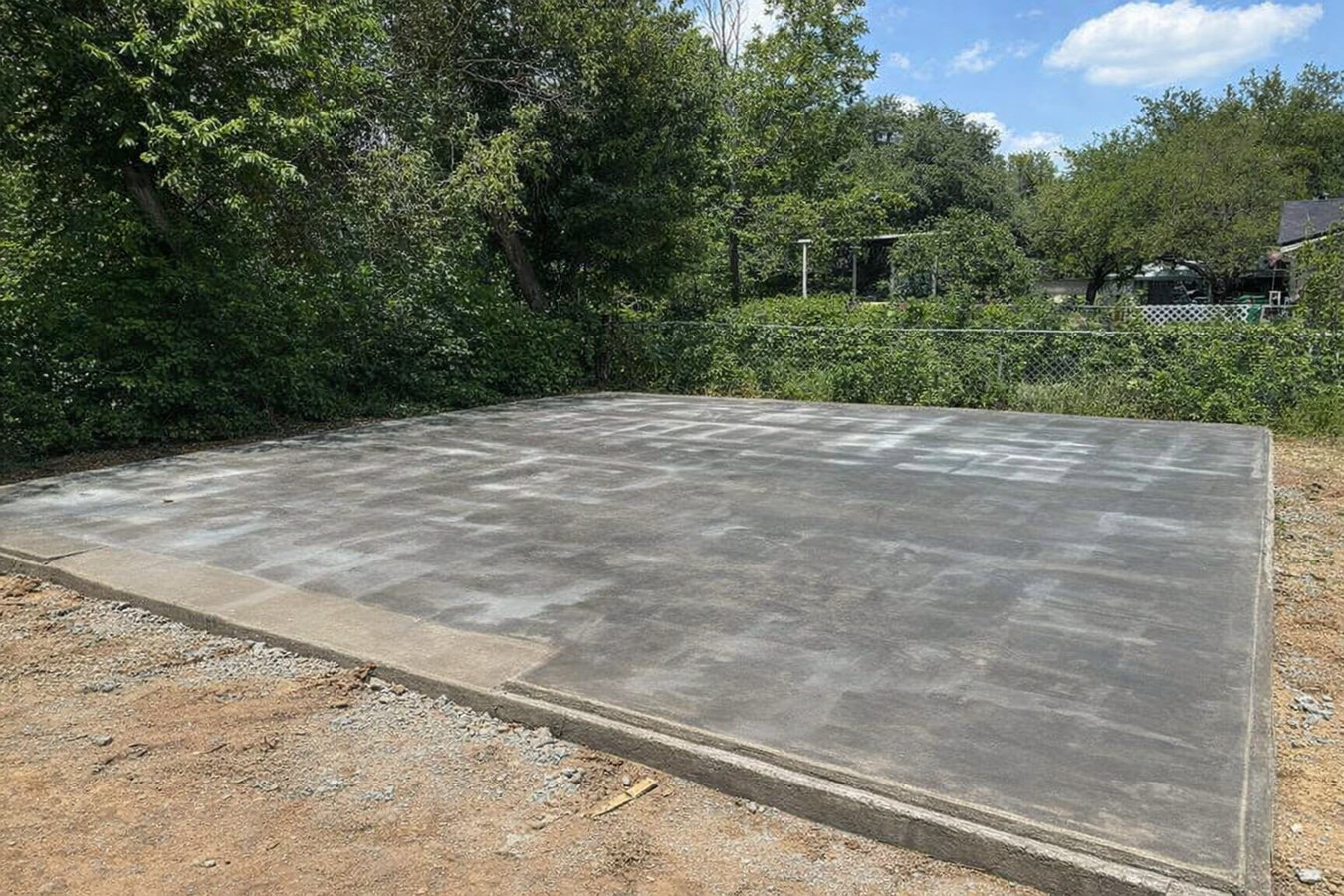
The clay soil in Wichita Falls is hard on concrete foundations. We pour slabs engineered for local ground conditions - reinforced, properly cured, and permit-backed - so your home has a base you can count on for decades.
Slab foundation building in Wichita Falls starts with grading and compacting the soil, laying a gravel drainage base, and placing steel reinforcement before the concrete is poured - the entire pour typically finishes in a single day, with the slab ready to build on after a minimum of seven days of curing, and full strength reached around 28 days.
A slab is the most common foundation type for new construction in Wichita Falls and across North Texas. It sits directly on the ground - no basement, no crawl space - and the quality of what goes into the ground before the pour matters more than almost anything else. Homes in this area are especially dependent on a well-built slab because the expansive clay soil never really stops moving.
If your project also requires structural supports below the slab, we can pair slab work with our concrete footings service so every element is designed and poured as part of the same project.
If you are building a new home, garage, workshop, or addition in Wichita Falls, a slab foundation is the first thing that needs to happen. Nothing can be framed until the concrete is poured and cured. Starting this process early - including permit applications - keeps your construction timeline on track.
Hairline cracks are normal as concrete ages. But cracks wider than a quarter-inch, or diagonal cracks running from the corners of door frames, signal that the slab is moving in ways it should not. In Wichita Falls, this is often tied to the clay soil expanding and contracting - and it may mean the existing slab needs significant repair or full replacement.
When a slab shifts unevenly, the frame above it shifts too. The first place homeowners notice is doors and windows that suddenly stick, drag, or won't latch properly. If multiple doors in your home started sticking around the same time - especially after a long dry stretch - the foundation is worth having assessed.
If you are tearing down an old garage or outbuilding in Wichita Falls to replace it with something new, the old slab may have been poured to lower standards than what is required today. Starting fresh with a properly reinforced slab is often the smarter long-term choice, rather than trying to build on decades-old concrete.
Every slab we pour starts with honest site preparation - grading and compacting the soil, removing soft spots, and laying a gravel drainage layer before a moisture barrier and steel reinforcement go in. The edge beams along the perimeter are thicker than the main slab to carry the weight of your walls, and we design those beams for the heavier clay soils common across Wichita Falls. Control joints are cut or tooled in at planned intervals to give the concrete somewhere to flex rather than cracking randomly over time.
We handle the full permit process with the City of Wichita Falls Development Services and schedule city inspections at the required stages - you should not have to manage that on your own. For projects that also need below-grade support, our concrete footings service can be combined with the slab pour. And when the project is complete and you are ready for the next phase, foundation installation work - including inspection, warranty documentation, and final walkthrough - rounds out the process.
Full slab builds for new homes, ADUs, and additions - graded, reinforced, and poured to current building code.
Detached garages, workshops, and storage structures need a properly sized slab to stay level and useful long-term.
For lots with particularly unstable or clay-heavy soil, post-tension slabs provide extra resistance to ground movement.
Full demolition of an existing slab, site rework, and fresh pour - suited when the existing foundation cannot be salvaged.
We apply for all required city permits and coordinate inspector visits so you receive documentation showing work was done to code.
Summer pours in Wichita Falls require specific timing and protection methods - we schedule and manage these to protect your slab.
Wichita Falls sits on some of the most active clay soils in North Texas. The soil swells when it absorbs water from spring rains and shrinks hard during the dry stretches that hit every summer - and some years, like 2011, those dry stretches go on long enough to cause visible gaps between soil and slab edges across entire neighborhoods. A concrete slab contractor from outside this area may not account for that kind of movement in their design. The edge beams, the steel layout, and the base preparation all need to reflect local soil behavior, not a generic North Texas spec. Homeowners in areas like central Wichita Falls and surrounding communities have seen what happens when that knowledge is missing - and it shows up in the foundation within a few years.
Summer heat adds another layer of complexity. Wichita Falls regularly sees temperatures above 100 degrees from June through August, and fresh concrete poured in that heat can dry too fast on the surface before it has fully hardened underneath - which leads to surface cracking and a weaker slab overall. We schedule summer pours for early morning and use curing compounds to slow the drying process. Clients we have worked with in Gainesville and other parts of our service area face similar conditions, and the same attention to timing and curing applies on every job.
Reach out by phone or through the contact form and describe your project. We reply within one business day and schedule a site visit - phone quotes on foundation work are rarely accurate enough to rely on.
We walk the property, check soil conditions, and review your plans or lot survey. The written estimate breaks out site prep, steel, permits, and labor separately - no bundled totals that hide where the money goes.
We apply for the required city permit before any work begins. Once approved, the crew grades and compacts the soil, lays the gravel base and moisture barrier, and positions the steel reinforcement - usually taking one to three days.
The slab is poured and finished in a single day for most residential projects. A city inspector checks the work, and the concrete cures for at least seven days before you can build on it - longer during a Wichita Falls heat wave.
No pressure, no obligation. We visit your site, check the soil, and give you a clear written quote - usually within one business day of your request.
(940) 298-1855We have poured residential slabs in Wichita Falls and every community on our service map - from Lawton to Abilene to Denton. Local soil knowledge from each of those markets informs how we approach site prep and reinforcement decisions on every project.
We apply for all required city permits and handle the inspection schedule. You receive documentation that the work was done to code - which protects you when you sell, refinance, or need to make a warranty claim.
We follow American Concrete Institute guidelines for slabs built on expansive soils - deeper edge beams, appropriate steel layout, and proper base compaction. These are not optional upgrades here - they are what this region's soil demands.{" "}
Summer pours in Wichita Falls require early-morning scheduling and active curing management. We do not cut these steps to finish faster, because a slab that dried too fast in July shows it in October - and that is your foundation we are talking about.
The American Concrete Institute publishes the standards that govern how residential slabs should be reinforced and cured - and following those standards matters more in an expansive-soil market like Wichita Falls than almost anywhere else in Texas. Every slab we pour is built to those specifications.
Full foundation installation service covering permit management, city inspections, and a final walkthrough with written warranty documentation.
Learn moreBelow-grade footing pours that anchor walls, columns, and structural elements - often combined with slab work on the same project.
Learn morePour season fills up fast - the sooner we assess your site, the better we can plan around weather and city inspection availability.