
Loading...
Serving Wichita Falls, TX and surrounding areas. (940) 298-1855
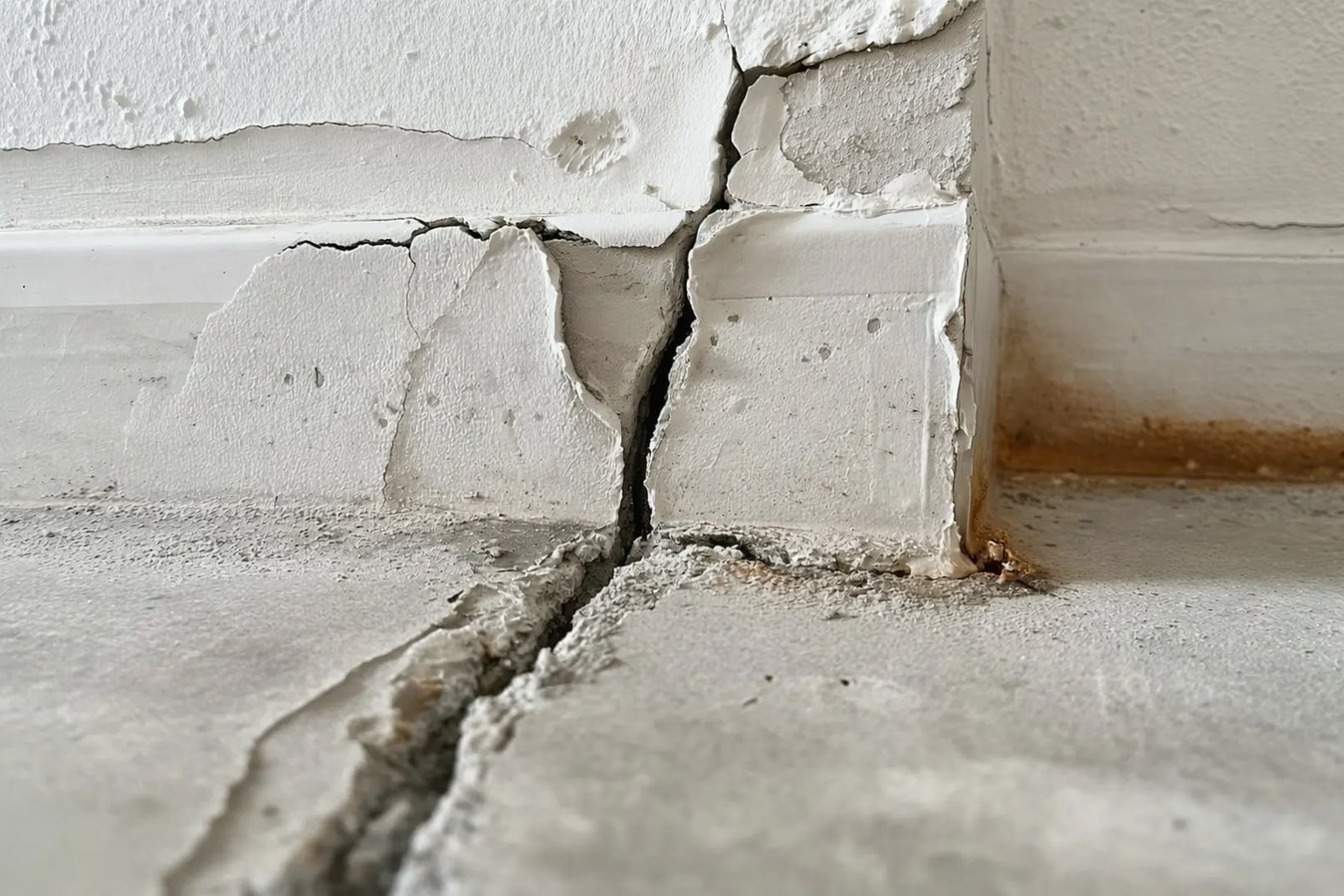
Sticking doors, widening cracks, and sloping floors are signs your foundation has shifted. We lift sunken foundations back toward level with permitted pier work built for Wichita Falls clay soil.
Foundation raising in Wichita Falls lifts a sunken or tilted slab back toward its original level position using steel or concrete piers driven deep into stable soil beneath the reactive clay layer - most residential jobs take one to three days, require a city permit and post-work inspection, and can be completed while you stay in your home.
This is not a patch job. The piers anchor your foundation to ground that does not move with the seasons, which is the only real solution to the shrink-swell clay soil that causes most foundation problems in Wichita Falls. Once the piers are in and the foundation is lifted, the cracking, the sticking doors, and the sloping floors typically improve - often without any additional carpentry or drywall work.
If your home needs structural footing work alongside the lift - common in older Wichita Falls properties where the original footings were too shallow - we can pair foundation raising with slab foundation building to address the full scope on a single schedule.
If interior doors that used to swing freely now drag on the floor or refuse to latch, your foundation may have shifted. In Wichita Falls, this symptom often first appears in late summer or early fall - right after the clay soil has dried out through the hottest months. It is one of the most reliable early warning signs that something is moving underneath your home.
Diagonal cracks in drywall - especially ones starting at the corners of door frames or window frames and running at a 45-degree angle - are a classic sign of foundation movement. Hairline cracks from normal settling are common in older homes, but cracks wider than a quarter inch, or cracks that have grown since you last looked, deserve a professional evaluation. Wichita Falls homes built in the mid-20th century are especially prone to this.
Stand in the middle of a room and pay attention to whether the floor feels level. In more advanced cases, you can actually see a slope. Uneven floors in a slab-foundation home almost always point to foundation movement rather than a flooring problem, and this symptom tends to worsen after dry summers in Wichita Falls.
Walk around the outside of your home and look at the brick or masonry. Stair-step cracks running along the mortar joints - especially near corners - are a strong indicator that the foundation beneath that section has dropped or shifted. In Wichita Falls, these cracks often appear or widen after a prolonged dry spell because soil contraction is most severe at the perimeter where the roof overhang keeps rain from reaching the ground.
Every foundation raising job starts with a thorough on-site assessment - not a quick walk-around, but a measured evaluation of how far out of level the floor is and where the movement is concentrated. We use that data to build a pier placement plan that addresses the actual problem, not just the most obvious symptoms. Piers are driven to a depth that reaches stable soil below the reactive clay layer, hydraulic jacks are used to carefully lift the foundation back toward level, and the work is inspected and permitted through the City of Wichita Falls before we close out the job.
For homes that need their existing slab rebuilt rather than lifted, we offer slab foundation building as a separate service. Customers adding onto an existing home after a lift often need concrete cutting to create clean openings in the existing slab before the addition is connected - we can coordinate both scopes on a single timeline.
For slab foundations that have dropped or tilted, suited to the reactive clay soil conditions throughout Wichita Falls and surrounding areas.
Full measurement of floor elevation changes, crack mapping, and drainage review before any quote is finalized - for homeowners who want to understand what they are dealing with.
We pull the required City of Wichita Falls permit, coordinate the city inspector visit, and provide documented approval - required for resale and financing.
Covers the installed piers and any re-leveling needed at repaired locations - stays with the home if you sell, which is a meaningful asset in a buyer inspection.
After every lift, we walk you through a perimeter watering plan to keep soil moisture stable and protect the repair through future drought cycles.
For homes where the foundation needs both lifting and partial slab replacement, we scope and manage both phases rather than handing off between crews.
Wichita Falls sits on some of the most reactive clay soil in Texas. This shrink-swell clay absorbs moisture and expands, then dries out and contracts sharply when the rains stop - and the contraction can be severe after the kind of prolonged drought cycles this region experiences regularly. Homes in established neighborhoods like Floral Heights, Midtown, and the areas near Sheppard Air Force Base were built from the 1940s through the 1970s, when slab foundations were often poured directly on untreated clay with no moisture barrier underneath. Decades of that soil movement have taken a measurable toll, and fall is often when homeowners first notice new cracks or sticking doors - right after summer has dried the soil to its most contracted state. The Texas A&M AgriLife Extension has published plain-language guidance on how Texas clay soils affect residential foundations and what homeowners can do to manage the problem long-term.
Homeowners in Gainesville and Lawton face similar soil conditions, and we regularly serve both communities. If your home sits on clay soil and has not had a foundation inspection in several years, fall - when symptoms are most visible after a dry summer - is a practical time to schedule one. Early attention is almost always less expensive than waiting until the movement becomes severe.
Call or send a message online and we will get back to you within one business day to schedule a time to look at your home. The first call is a conversation - just describe what you are seeing and we will handle the rest.
We come out, measure how far the floor is out of level, map the cracks, check drainage, and assess the full perimeter of the home. You receive a written estimate with a pier count, the method, the warranty, and the total price - nothing verbal.
Once you approve the work, we pull the City of Wichita Falls building permit before scheduling the crew - this typically adds a few business days. Use that time to clear furniture away from exterior walls and note any sprinkler lines near the foundation.
The crew excavates small holes at each pier location, drives piers to stable soil, and uses hydraulic jacks to carefully raise the foundation. After the lift, a city inspector verifies the work. Before the crew leaves, we walk you through the soaker hose program for your specific home.
We will come out, measure what is happening, and give you a written estimate at no charge. No pressure. Just a straight answer about what your home needs.
(940) 298-1855The City of Wichita Falls requires a permit and city inspection for foundation repair work. We handle the permit application and schedule the inspector - so the work is officially on record, which protects you at resale and gives you recourse if anything is ever questioned.
We do not give quotes over the phone or arrive with a fixed number of piers already in mind. Every estimate is based on measured elevation data from your specific home - how far out of level each section is and where the movement is concentrated. That approach leads to repairs that hold rather than ones that address the visible symptoms.
Foundation work in this area is different from other parts of the country because the soil is different. The reactive Vertisol clay that runs through Wichita County requires piers driven deeper than many generic pier spacing charts suggest. We work in this market regularly and size jobs for the actual conditions - not a national average.
Every foundation raising job comes with a transferable warranty on the pier work, meaning it stays with the home if you sell. The Foundation Repair Association recommends looking for this feature specifically - a warranty that only covers materials and not labor for future adjustments is worth far less than it sounds.
The Foundation Repair Association recommends asking any contractor for a pier placement plan that explains why they chose that number and spacing - a question a prepared local contractor should be able to answer on the spot. We welcome that conversation and will walk you through our reasoning before you sign anything.
Precise saw cuts through driveways, slabs, and walls - often needed to connect additions to an existing foundation after a lift.
Learn moreFull slab pours for homes where the existing foundation is beyond repair and a new start is the right answer.
Learn moreFoundation movement gets worse with every dry summer - the sooner you have it assessed, the less expensive the repair. Call today or request a free written estimate online.