
Concrete Slab & Foundation Work
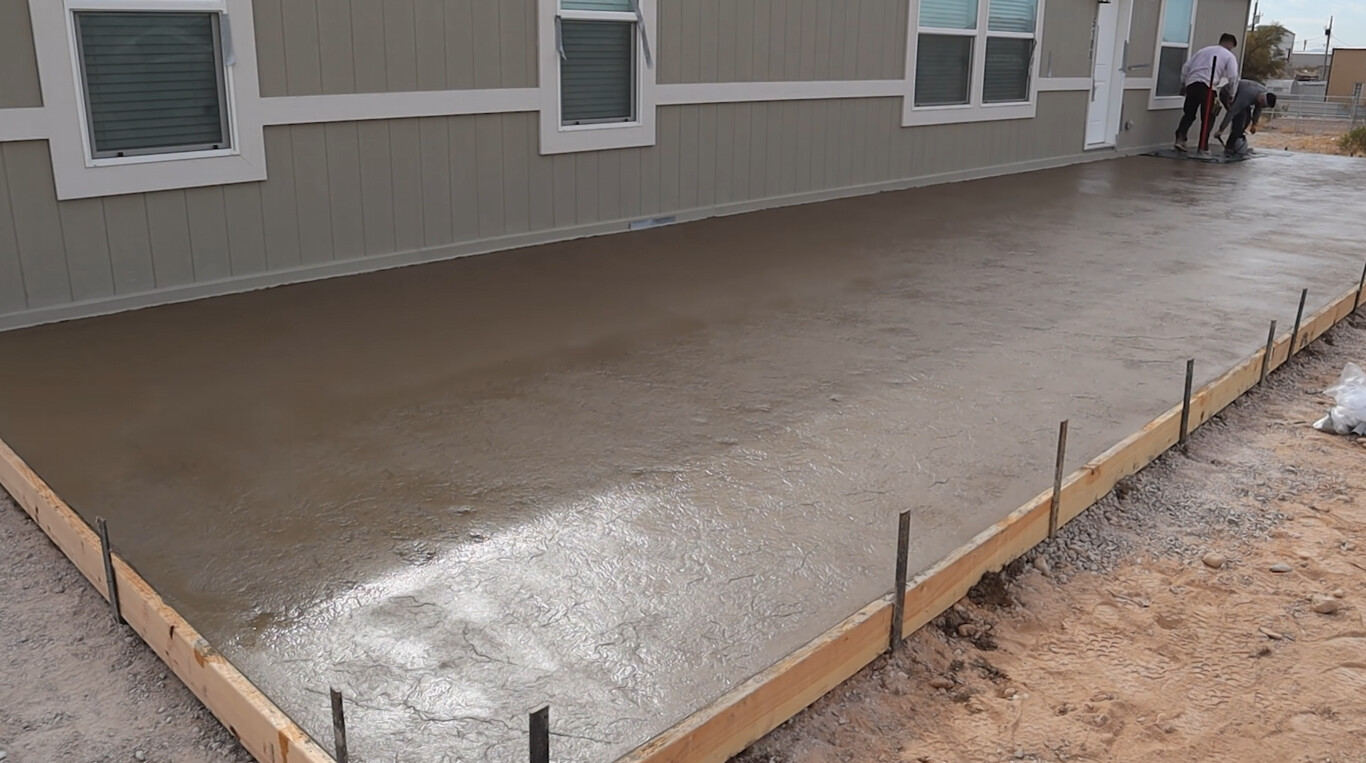
Get a strong, properly engineered concrete slab or foundation built by experienced professionals who do not cut corners on the prep work.
The Foundation Is Everything
A concrete slab or foundation is the base that everything else rests on. Get it right and the structure above it stays level, stable, and problem-free for decades. Get it wrong and you are dealing with cracked walls, sticking doors, uneven floors, and costly repairs down the road.
In Wichita Falls and the surrounding North Texas area, the expansive clay soils make proper foundation work especially important. Clay soil swells when wet and shrinks when dry, which puts constant pressure on anything built on top of it. We account for this in our site preparation and mix design so your slab performs well through the full range of Texas weather.
Whether you need a slab for a new home, a workshop, a storage building, a commercial structure, or an addition to an existing building, we have the equipment and experience to pour it correctly. We handle everything from small accessory structure pads to large commercial slabs.
Types of Concrete Slabs We Pour
Not all slabs are the same. The right design depends on what will be built on top of it and the soil conditions underneath. Here is a look at the most common types we handle.
Monolithic Slab
The slab and footing are poured all at once in a single pour. This is the most common type for homes and small commercial buildings in Texas because it is fast, cost-effective, and well-suited for stable soil conditions.
Stem Wall Slab
A separate footing is poured first, then a stem wall is built up, and finally the slab is poured inside the walls. This type offers more flexibility in areas with greater frost depth or where extra elevation is needed.
Post-Tension Slab
Steel cables are threaded through the slab and tensioned after the pour. This method is commonly used in areas with clay-heavy soils like North Texas because it resists the movement caused by soil expansion and contraction.
Equipment and Outbuilding Pads
Pads for garages, workshops, storage buildings, generator pads, AC units, and similar structures. These are typically 4 to 6 inches thick with appropriate reinforcement for the load they will carry.
How We Build a Slab the Right Way
Here is what our process looks like from site visit to finished slab. Every step matters.
- Site evaluation: We assess the soil, drainage, and grade before anything is scheduled.
- Layout and forming: We stake out the exact dimensions and build forms to control the slab shape and thickness.
- Excavation and base prep: We dig to the correct depth, compact the sub-grade, and lay a gravel base layer for drainage and support.
- Vapor barrier installation: On interior slabs, we lay a moisture barrier to prevent ground moisture from migrating up through the slab.
- Reinforcement placement: Rebar or post-tension cables are positioned at the correct height within the slab before the pour.
- Concrete pour and finishing: We pour the mix, screed it level, and finish the surface to the specified texture or smoothness.
- Curing and form removal: We apply a curing compound or use wet curing methods to allow the slab to gain full strength before forms are stripped.
If your project requires a garage floor with a special surface finish, we also offer epoxy garage floor coatings that can be applied over a freshly cured slab for a clean, durable finish.
Need a slab poured right?
Call us for a free on-site estimate. We serve Wichita Falls, TX and surrounding areas.
Warning Signs of a Slab Done Wrong
Not every concrete contractor takes the same level of care. Here are some red flags that indicate a slab was not built correctly and what those problems lead to over time.
Cracks that appear within the first few months can mean the mix was too wet, curing was rushed, or the base was not properly compacted. Slabs that settle or tilt usually have inadequate sub-base preparation or were poured on unstable fill material. Moisture coming up through a slab typically means no vapor barrier was installed or it was installed incorrectly.
These problems are not cosmetic. They affect everything built on top of the slab and can become very expensive to correct later. That is why we do the prep work correctly the first time, even if it takes a little longer.
If you have an existing slab that is showing signs of failure, ask us about your repair and leveling options. Our team also handles concrete repair and replacement work for slabs that need structural attention. And if you want to see everything we offer, visit our homepage for a full overview.
Frequently Asked Questions
How thick should a concrete slab be for a house?
How long does a concrete slab take to cure before building on it?
Do I need a soil test before pouring a foundation slab?
Ready to talk through your project? Call us or visit our homepage for a full overview of our services.
Call (940) 298-1855